SCROLL

Fractional CIO/CTO Advisor | Technology Executive

John Kreiner

A deeply technical technology executive who understands business, builds teams, and knows how to make hard technology decisions in real operating environments.

40 years in technology | Deeply technical CIO/CTO leadership | Cloud, security, AI governance, software delivery, and transformation | SaaS, healthcare, nonprofit, financial services, AdTech

About

Technology Leadership Grounded in Business Reality

I am a technology executive and advisor with 40 years of experience spanning software engineering, infrastructure, cybersecurity, SaaS platforms, cloud modernization, Agile delivery, AI governance, and enterprise technology strategy. My career has moved across banking, adtech, financial services, healthcare, nonprofit, and entertainment technology — giving me a practical understanding of how technology decisions work across very different operating environments.

I started my career as a software programmer at Bank of Baltimore after outscoring 103 candidates — many with computer science degrees — on a technical assessment. That experience shaped a belief I have carried ever since: technology must be grounded in how the business actually works and what the people it serves actually need.

Today I work as a fractional CIO/CTO advisor and independent consultant, helping organizations align technology, security, systems, and teams with business strategy so they can execute better and grow smarter. I bring hands-on technical judgment, CIO/CTO-level leadership, and a practical understanding of how systems, teams, vendors, security, data, AI, and business priorities need to work together.

Based in Bel Air, MD · Open to fractional and full-time engagements · Serving nonprofit, healthcare, SaaS, and mission-driven organizations

What I Do

Where Technical Judgment Meets Business Reality

My work sits at the intersection of technical judgment and business reality. I help organizations make better technology decisions, modernize platforms, strengthen security, improve software delivery, and build teams that can execute. Whether the engagement is fractional advisory, a defined consulting project, or full-time executive leadership, my approach is the same: understand the business first, then apply technology thinking that fits the mission, scale, budget, and risk environment.

I have led technology organizations ranging from small nonprofit teams to global engineering groups of 100-plus professionals across three countries. I have served as CTO, CTSO, VP of Engineering, Director of Software Development, Head of PMO, and fractional CIO/CTO advisor. Each role reinforced the same belief: technology creates the most value when it is directly connected to business outcomes and the people it serves.

My elevator pitch is simple: I help organizations align technology, security, systems, and teams with business strategy so they can execute better and grow smarter.

How I Help

Practical Technology Leadership, Applied to Your Business

I work with organizations that need practical technology leadership, better execution, and clearer alignment between business goals and technical decisions.

Technology Organization Design

Assessment of team capability, leadership depth, hiring needs, training opportunities, and vendor-versus-internal decisions – matched to your mission, scale, budget, and timing.

Technology Strategy and Roadmaps

Practical plans that connect systems, security, data, teams, vendors, and business priorities into a roadmap the organization can actually execute.

Cloud and SaaS Modernization

Platform decisions grounded in architecture, operations, security, cost, maintainability, and team capability — not just a migration checklist.

Cybersecurity, Compliance, and Continuity

Governance, policies, audit readiness, business continuity, and responsible risk management in regulated and mission-driven environments.

Software Engineering and Delivery

Team structure, delivery discipline, Agile and SAFe, CI/CD, DevSecOps, quality, and execution transparency that connects to business outcomes.

AI Readiness and Governance

Responsible adoption, use-case prioritization, guardrails, data protection, and practical experimentation that creates real operational value.

Technology Leadership in Practice

How I Think About Technology Decisions

My work has always sat at the intersection of technical judgment and business reality. The examples below show how I think about technology decisions in practice: what to modernize, what to simplify, what to secure, what to measure, and how to set teams up to execute. I have led through multiple generations of technology change — from mainframe and client/server systems to enterprise integration, SaaS platforms, cloud modernization, Agile delivery, DevSecOps, and AI-enabled operations. That range matters because technology decisions are rarely one-size-fits-all.

Cloud and SaaS Modernization

At Advanced Metrics, cloud modernization meant modernizing Azure-based SaaS platforms supporting behavioral health organizations — balancing scalability, security, compliance, customer implementation needs, and the practical capabilities of the engineering team. That is the kind of cloud decision-making I bring: not “move it to the cloud” as a slogan, but determining what architecture, delivery model, security posture, data flow, and support model actually fit the business.

Software Delivery, Agile, CI/CD, and DevSecOps

I have led teams through multiple generations of software delivery: structured project management, PMO governance, Agile adoption, SAFe, CI/CD, DevSecOps, and AI-assisted engineering. At Advertising.com, that meant driving Agile adoption across a $15M-plus portfolio. At Integral Ad Science, leading SAFe PI Planning across 150-plus participants. At Advanced Metrics, applying secure DevSecOps in a regulated healthcare environment. Process only works when it fits the team, the architecture, the business urgency, and the risk profile.

Security, Compliance, and Regulated Environments

My security experience is grounded in regulated environments where security was not theoretical. At Prometric, implementing secure coding practices tied to FISMA and PCI requirements. At Advanced Metrics, serving as Security Officer leading HIPAA and SOC 2 audit activities. I think about security as a business discipline: governance, architecture, development practice, vendor exposure, business continuity, data protection, and executive accountability all have to work together.

Team Capability and Global Delivery

Technology strategy only works when the team can execute it. At Prometric, I led 100-plus engineering and QA professionals across three countries, built a center of excellence in Ireland, and expanded capabilities in India. At Advanced Metrics, the challenge was different: standardizing architecture, improving accountability, and developing leadership depth. In both cases the question was not simply what technology to use — it was what the organization could realistically build, support, secure, and sustain.

Data, Analytics, and Interoperability

At Advertising.com, my team was among the early adopters of Netezza Performance Server, supporting ingestion and processing of millions of data points per second. At Advanced Metrics, analytics tied directly to care coordination, Power BI reporting, interoperability, and value-based care workflows. Data platforms only matter when they help the business make better decisions, improve operations, or create better outcomes for customers and end users.

AI Readiness and Governance

In my current fractional work, I built an event management platform in two days using Angular, Node.js, MongoDB, and GitHub Copilot — validating how AI-assisted engineering can accelerate delivery while raising important questions around code quality, security, testing, and governance. I advise organizations on where AI creates practical value and where it introduces risk: workflow automation, analytics-enabled decision support, guardrails, validation, data protection, and secure adoption.

Right-Sized Technology Decisions

One advantage of working across enterprise, SaaS, nonprofit, healthcare, financial services, and adtech is that I have learned not to over-prescribe. A Fortune 500 environment may need complex architecture and enterprise tooling. A smaller nonprofit may need a cleaner application portfolio, better vendor terms, and a roadmap the team can sustain. My role is to match technology decisions to mission, scale, budget, risk, team capability, and timing.

The Work That Shaped How I Lead

Selected Stories From a Career Built on Technology and Trust

These are not job descriptions. They are the experiences that shaped how I think, what I have learned, and why those moments matter to my leadership today.

Building a Stronger Technology Foundation for Mission-Driven SaaS

My relationship with Advanced Metrics began before I formally joined. I was engaged to mentor a senior technology resource the CEO and COO believed might grow into the CTO role. Over nine months that advisory relationship built deep trust with the executive team — and reinforced one of my core beliefs: titles do not create influence. Trust, judgment, honesty, and the willingness to help people succeed create influence. I ultimately joined as CTO, later CTSO, because the mission mattered. The role brought together software engineering leadership, infrastructure, cybersecurity, compliance, SaaS platform strategy, and business-facing technology leadership across a global team of more than 20 professionals.

Transforming a Global Software Organization Into a Value Driver

At Prometric, I led more than 100 software engineering and QA professionals across three countries in a regulated, high-volume environment. Over four years we reduced software deficiencies released to the field by 67 percent — including a 46 percent reduction in the first year — expanded global delivery capacity by 25 percent, and saved approximately $500,000 annually. I built a center of excellence in Dundalk, Ireland and expanded capabilities in Gurgaon, India. What I am most proud of is not the numbers. It is that we changed how the organization operated — from reactive delivery toward a disciplined, measurable, and accountable software function.

Leading Leaders and Developing the Leaders Within Them

One of the most meaningful leadership challenges of my career came at Prometric, where I inherited a software engineering organization whose leaders had previously operated as a separate architecture group. These were strong, technically deep individuals — but they had not been asked to trust each other, collaborate across teams, or see themselves as a unified leadership group. Multiple leaders before me had tried and failed to make it work.

My approach was deliberate. I brought them into the same room and created structured opportunities for them to learn each other’s thinking, challenge assumptions, and find ways to add value across all teams rather than defending their own domains. Trust built slowly, then naturally. The group became stronger than the sum of its parts.

But the deeper challenge was helping each of them make the transition from individual contributor to leader — and that transition is harder than it looks. Strong technical people are often defined by being the one who solves the hardest problems, writes the best code, or knows the system better than anyone else. Stepping into leadership means giving that up. It means teaching what you know instead of doing it yourself, delegating the work you are best at, and measuring your contribution through the growth of others rather than personal output. That shift does not happen naturally. It has to be developed deliberately — through coaching, honest feedback, structured 360 reviews, and enough patience to let people find their footing in a new identity.

That experience, reinforced by formal leadership development at AOL and ongoing 360 feedback throughout my career, shaped how I think about building leadership teams: you are not just hiring for technical skill. You are developing people who can multiply the capability of everyone around them.

Restoring Momentum in a High-Stakes Technology Refresh

My work at Advertising.com began with leading a $5 million technology refresh initiative across a cross-functional team of 30 people. That assignment expanded into ownership of the Project Management Organization and a portfolio valued at more than $15 million. My team managed the project between NBC Universal and News Corporation that led to the creation of Hulu, and we were among the early adopters of Netezza Performance Server, enabling ingestion and processing of millions of data points per second. The work combined transformation, scale, and operating discipline in ways that shaped how I think about portfolio governance and delivery leadership.

Scaling Delivery Discipline Across a High-Growth AdTech Environment

At Integral Ad Science, I led eight quarterly SAFe Program Increment Planning events involving more than 150 participants and more than 20 teams. The work required aligning product, engineering, leadership, and delivery teams around a repeatable operating model in a fast-moving environment. This experience reinforced my belief that delivery frameworks are only useful when they help teams make better decisions, manage dependencies, surface risks, and deliver outcomes the business can understand.

Advising Mission-Driven and Entertainment Technology Organizations

With Inner County Outreach, I began pro bono assessing EMR and customer information system challenges, then moved into a retained fractional CIO role advising on vendor strategy, SharePoint planning, security policies, business continuity, and responsible AI governance. With 3rd Brain, I stepped in after the unexpected loss of key technical founders — recovering patented SmartStream™ platform assets, migrating technology into a modern cloud environment, directing MVP development, and helping leadership reconnect technical execution to commercialization strategy. Both show how I like to work: understand the context, stabilize what matters, reduce risk, and create a practical path forward.

The Thread That Connects the Work

Across four decades and multiple generations of technology change, the common thread is not simply technology. It is the ability to understand how a business works, identify what matters, earn trust, and turn complexity into progress. My career has moved across banking operations, software development, enterprise consulting, professional services, project and portfolio leadership, global software engineering, SaaS platforms, cybersecurity, cloud modernization, and executive technology strategy. Each step reinforced the same belief: technology creates the most value when it is directly connected to business outcomes and the people it serves.

I have often stepped into environments where the work was complex, the stakes were high, and the path forward needed structure. Whether helping build a new business line, modernizing enterprise platforms, leading global software teams, establishing portfolio discipline, strengthening security and compliance, or rebuilding technology organizations, my work has centered on the same principles: understand the business, create clarity, build trust, improve execution, and deliver outcomes that matter.

That is the perspective I bring into consulting, advisory, and executive leadership work today. I help organizations make sense of complexity, align technology with business priorities, and turn strategy into practical execution. Whether the need is transformation, operational improvement, platform modernization, team leadership, delivery discipline, cybersecurity maturity, or technology strategy, my approach remains grounded in the same principles that shaped my career from the beginning: listen first, understand the business, build trust, create clarity, and deliver value people can actually see and use.

Experience

A Career Built on Technology Leadership Across Every Stage of the Business

NexAlign Solutions is my independent advisory and consulting practice, providing executive-level technology guidance across strategy, governance, modernization, vendor evaluation, system selection, infrastructure, cybersecurity, AI enablement, and delivery planning. Depending on the engagement, I have served as a hands-on technology leader, advisor to executive teams, delivery strategist, or technical operating partner helping organizations move from uncertainty to actionable plans.

This work has allowed me to apply the full range of my executive technology background in focused, high-impact ways. I have guided system and vendor evaluations, supported nonprofits with practical technology leadership, designed AI and LLM-enabled automation concepts for healthcare practices, and helped organizations create roadmaps that connect technology investments to operational improvement and return on investment. The common theme has been helping leadership teams make sense of complexity and turn technology into a practical lever for business performance.

Inner County Outreach is a faith-based nonprofit serving Harford, Baltimore, and Cecil Counties, with programs supporting youth, families, mental health, basic needs, re-entry, mentoring, and long-term self-sufficiency.

I was introduced to the COO in April 2025 and initially engaged pro bono to help assess challenges with the organization’s EMR and customer information systems, particularly the lack of integration between the two platforms. After reviewing licensing documents, I discovered the organization had been locked into a three-year renewal approximately six months earlier, creating contractual constraints that limited near-term replacement options.

Working with the COO, Clinical Director, and internal team members, I helped document requirements for a future platform that could combine needed functionality from both systems into one more unified environment. I also coordinated vendor demonstrations so the organization could evaluate future-state options and prepare for a transition when the existing license term expires.

The engagement later evolved into a monthly fractional CIO retainer. In that role, I supported vendor negotiations as a member of Inner County Outreach, advised the organization’s interim strategy to move data into SharePoint, and provided guidance on updates to the technology strategy plan, security policies, Business Continuity Plan, and responsible use of AI. I also advised the executive team on AI governance considerations, including practical guardrails for adoption, risk management, data protection, and alignment with the organization’s mission and operating needs.

I continue to advise the executive team on ensuring technology decisions are connected to the organization’s broader business strategy, with a focus on practical modernization, responsible governance, and sustainable technology choices that support service delivery.

3rd Brain is an entertainment technology company developing next-generation film, television, and streaming experiences through its patented SmartStream™ platform. The company’s technology supports adaptive, real-time entertainment experiences designed for media, streaming, and content distribution partners.

As fractional Chief Technology Officer, I am responsible for overseeing the technology strategy and innovation at 3rd Brain, ensuring the development and implementation of cutting-edge digital solutions. This role includes managing IT infrastructure, software development, cybersecurity, data analytics, and emerging technologies to enhance content creation, distribution, and audience engagement. I collaborate with my leadership team to align technology initiatives with business goals, optimizing digital platforms, production workflows, and consumer experiences.

I joined 3rd Brain as a fractional Chief Technology Officer after the company had unexpectedly lost key technical and creative founders, including the author of the patented backend server technology and the creator of the front-end experience. That left the organization facing significant technology continuity risk, including access to source code, platform assets, licenses, and operational knowledge. My first priority was to recover and secure the company’s critical technology assets so the business could move forward.

After restoring access to the backend server software, source code repositories, and front-end assets, I led the migration of the platform into a modern cloud environment and directed engineering work to create a new Minimum Viable Product. The MVP transformed a dormant technology asset into a demonstration platform that could support conversations with entertainment, media, and streaming organizations. I also advised leadership on technology strategy, product roadmap priorities, commercialization planning, and market positioning.

This engagement reflects the kind of work I enjoy as a fractional technology leader: stepping into a complex situation, restoring order, protecting the value of important technology assets, building a practical path forward, and helping leadership connect technical execution to business opportunity.

Advanced Metrics, now QUALO, was a behavioral health and human services technology company providing SaaS platforms for care coordination, data collection, reporting, interoperability, analytics, and outcomes-focused service delivery. The company serves organizations operating in complex, human-centered environments where reliability, security, compliance, workflow alignment, and meaningful data are critical to customer success.

I served as Chief Technology, providing strategic and operational leadership across software engineering, infrastructure, cybersecurity, DevSecOps, SaaS platform delivery, customer responsiveness, and compliance readiness. I led a global engineering team of more than 20 professionals and worked across executive, product, clinical, operational, and customer-facing teams to align technology strategy with business priorities and user needs. I also served as Security Officer, with responsibility for HIPAA and SOC 2 compliance efforts, security posture, audit readiness, and protection of customer data.

My work at Advanced Metrics focused on rebuilding the technology organization, modernizing Azure-based SaaS platforms, improving delivery consistency, and strengthening the company’s security and compliance foundation. I led the development and implementation of technology strategy and roadmap planning, directed annual HIPAA and SOC 2 audit activities, improved accountability across the organization, and supported platform capabilities including EHR interoperability, Power BI integration, analytics, and customer delivery. One of the leadership outcomes I value most was coaching a lead engineer from a strong individual contributor into a high-performing team leader and eventual successor. Advanced Metrics brought together many of the themes that define my leadership: building the team, improving the platform, strengthening security, aligning technology with real business needs, and supporting organizations doing mission-driven work.

I joined BASYS as Vice President of Software Engineering to provide executive leadership across software delivery, engineering operations, team structure, and execution practices. The role included assessing the organization’s engineering model, understanding delivery challenges, and identifying opportunities to strengthen communication, accountability, and alignment between technology and business priorities.

Although my time at BASYS was brief, it reinforced an important leadership principle: executive technology roles succeed when there is clear alignment around mandate, decision rights, reporting structure, and expectations from the start. The experience further clarified the type of environments where I can create the greatest value: organizations that want practical, business-aligned technology leadership, honest assessment, clear operating structure, and disciplined execution.

Integral Ad Science is an advertising technology company focused on digital media quality, measurement, verification, and analytics.

I served as Senior Director and Head of the Program Management Organization, reporting into technology leadership and working across engineering, product, and operations. I provided Agile delivery leadership across a distributed SaaS engineering organization, guided continued adoption of the Scaled Agile Framework, facilitated quarterly PI Planning, coordinated Agile Release Train execution, supported roadmap alignment, and developed delivery reporting and portfolio visibility. The role required leading through influence across more than 20 teams and 150-plus participants involved in quarterly planning and execution.

I helped the organization improve delivery alignment, transparency, and execution discipline at scale. I led eight large quarterly SAFe Program Increment Planning events, coordinated product and technology roadmap planning, supported portfolio management for the organization, and helped restructure teams and release trains around value streams. I also doubled the size of the PMO and expanded its services across the enterprise. This work reinforced my ability to bring operating rhythm and delivery structure into complex, high-growth technology environments without losing sight of business priorities.

As Managing Director of Technology Solutions, I led infrastructure, user support, enterprise applications, help desk, audio/visual systems, and technology delivery functions across the organization. I was responsible for the leadership, strategy, and operations of technology platforms and systems, working with direct staff, matrixed resources, and external partners. My role required unifying technology execution across departments and creating a more consistent, transparent, and accountable delivery model.

I built the Technology Solutions function from a small team into a broader centralized capability, growing the team from 2 to 17 and adding project management, DevOps, and software development skill sets to better serve ministry, financial, and business support partners. I established a centralized Technology Solutions Center of Excellence, implemented a cross-functional Technology Board of Advisors to improve visibility and alignment across business units, standardized portfolio management practices, modernized infrastructure, and improved service levels across the enterprise. Additionally, I supported the development team on upgrading and adopting the latest version of Blackbaud.

Hartman Executive Advisors provides fractional CIO, technology leadership, and advisory services to mid-sized organizations.

As an Executive IT Advisor, I provided CIO-level leadership and advisory services to client organizations across the Mid-Atlantic region. My responsibilities included technology assessments, software selection, governance improvement, infrastructure evaluation, cybersecurity risk management, vendor management, strategic planning, budgeting, roadmap development, and operational improvement. I worked directly with executive teams and client stakeholders to align technology decisions with business needs.

This role strengthened my ability to step into unfamiliar environments quickly, identify what was not working, and recommend practical paths forward. I advised clients on governance, cybersecurity, scalability, system selection, and modernization. I supported organizations such as the National Federation of the Blind, Good Shepherd Services, The Y in Central Maryland, Maryland Food Bank, Van Metre Homes, and other commercial and nonprofit clients. The work required cutting through ambiguity, understanding each client’s operating model, and helping leaders make technology decisions that were grounded in their business realities rather than generic best practices.

Prometric is a global testing and assessment company operating in regulated, high-volume environments where software reliability, security, and operational consistency are essential.

As Director of Software Development, I led global software development and quality assurance organizations supporting enterprise delivery in a regulated environment. I managed more than 100 engineering and QA professionals across three countries, with responsibility for delivery execution, quality improvement, secure coding practices, process standardization, financial management, and cross-functional security initiatives. I managed significant budgets, including approximately $8.5 million in operating expense and $6 million in capital expense, owned the P&L for my group, participated in annual organizational budget planning, and partnered with Finance and business leaders to evaluate investments, staffing, and expenditures. I also built out a center of excellence in Dundalk, Ireland, housing leadership, software engineering, and quality assurance teams, and expanded the Gurgaon, India center of excellence by adding software engineering and leadership capabilities to an existing quality assurance team.

The role came with an immediate leadership test. During my interview with the CTO, he asked directly whether I could engage with former software architects — strong technical individuals who had recently been reorganized into the software development group — and make decisions alongside them on technical direction. I said yes. Earning their trust and turning that group into a cohesive, collaborative leadership team became one of the defining challenges and accomplishments of my time at Prometric.

I also served as a member of the organizational leadership team, which broadened the role beyond software delivery into enterprise operating leadership. That included participating in cross-functional security leadership, serving on a cross-functional security team, and contributing to global security strategy discussions. I was also handpicked by the CEO to lead a cross-functional, two-day leadership training program held offsite at Loyola University, an experience that reflected the level of trust placed in my leadership judgment and ability to guide leaders across the organization.

At Prometric, I helped transform the software development organization from a cost center into a stronger value driver for the business. I standardized processes, implemented secure coding practices tied to FISMA and PCI requirements, improved global delivery capacity, and strengthened quality discipline. Over four years, software deficiencies released to the field were reduced by 67 percent, including a 46 percent reduction in the first year. I also expanded global delivery capacity by 25 percent while saving approximately $500,000 annually. This remains one of the clearest examples of my ability to combine people leadership, financial discipline, process improvement, security awareness, enterprise collaboration, and measurable delivery outcomes.

When I arrived, the organization was reactive, siloed, and measured primarily by what went wrong. When I left, it had clearer processes, stronger quality discipline, global delivery capability, and a leadership team that trusted each other enough to solve problems together.

Safe-t-Technologies was an entrepreneurial mobile technology venture I founded after taking a voluntary layoff from Advertising.com / AOL. The opportunity allowed me to step away from a corporate leadership path and pursue the design, development, and launch of a mobile prayer journal app across Apple iOS and BlackBerry platforms.

As founder, I led product strategy, design, development, testing, app store submission, licensing coordination, and user support. I developed commercial applications for iPhone, iPod Touch, and BlackBerry devices, supported the product with Drupal-based web properties, and used Objective-C, Java, and BlackBerry SDK technologies to bring the platforms from concept to app store in less than three months. The experience strengthened my understanding of product ownership, market validation, mobile user experience, and the practical discipline required to turn an idea into a working commercial product.

Advertising.com was a high-growth advertising technology company focused on digital advertising platforms, online media delivery, and revenue-generating technology systems. The environment required close coordination across software engineering, QA, operations, infrastructure, product, business stakeholders, and executive leadership.

My work at Advertising.com began when I was asked to lead a $5 million technology refresh initiative involving approximately 30 cross-functional team members across engineering, quality assurance, and operations. From there, my responsibilities expanded into broader leadership of the Project Management Organization and enterprise technology portfolio. I managed a team of 12 project managers, including 10 full-time employees and 2 contractors, and oversaw a project portfolio valued at more than $15 million across custom software development, packaged software implementations, infrastructure, and data center initiatives.

The technology refresh project became a defining leadership experience because it required restoring structure, coordination, accountability, and communication around a high-stakes initiative. I provided clear status reporting to senior technology and business stakeholders, delegated work across multiple technical disciplines, and helped move the project forward through disciplined execution. In leading the PMO and portfolio, I standardized project management methods, created governance processes and documentation, improved enterprise-wide visibility and accountability, and introduced automation that reduced nonproductive reporting work for project managers. The work helped shift project and portfolio management from a reporting function into a more strategic discipline that supported better decisions, clearer priorities, and stronger delivery performance.

The role also included work on several high-impact technology and business initiatives. My team successfully managed the project between NBC Universal and News Corporation that led to the creation of the Hulu subscription service. We were also among the early adopters of Netezza Performance Server, enabling the ingestion and processing of millions of data points per second and giving the organization stronger analytical and data-processing capabilities at scale.

What stands out most from Advertising.com is the combination of transformation, scale, and operating discipline. I helped stabilize and deliver a mission-critical modernization effort, built stronger project and portfolio governance, drove Agile adoption, supported the organization’s integration into AOL’s enterprise operating model, and helped technology teams manage work that directly supported revenue, data processing, and strategic media partnerships.

Systems Alliance was a technology consulting and software company that delivered professional services, web content management, application development, workflow modernization, and integration solutions for government, education, insurance, commercial, and nonprofit clients. The company’s work combined software product implementation with custom consulting and delivery services.

I initially served as a senior consultant, providing technical leadership and consulting for clients including Monumental Life Insurance, Northeastern Supply, and Campus Concepts. Later, after Systems Alliance was acquired by a former PwC partner, I was recruited by the new owner to help build a professional services organization with a colleague. In that role, I helped shape project management and consulting services for government and commercial clients, provided account management, and led implementations of the company’s SiteExecutive web content management system, including full-site redesigns, website architecture mapping, and content migration.

My work included leading and mentoring delivery teams of 3 to 10 people across consulting, development, and implementation engagements. I helped clients modernize applications, improve workflow, integrate systems, and solve practical business challenges across insurance, education, distribution, and commercial environments. The work involved a broad technical base, including Microsoft technologies, .NET, Visual Basic, MicroFocus COBOL, JavaScript, service-oriented architecture, database integration, and legacy platform modernization.

Several accomplishments from this period stand out. I led the development of an electronic data interchange between American Military University, part of American Public University System, and the Air Force Tuition Assistance portal, helping streamline registration and payment for students using the portal. I also managed SiteExecutive CMS implementations and led a team of developers and graphic designers in the implementation of a web portal application for a major educational provider in the Baltimore area.

The role also included significant enterprise integration, modernization, and client-facing delivery work, including a bridge application connecting a Linux-based warehouse management system with an AIX-based ERP platform, along with service-oriented architecture initiatives that improved reliability and reduced long-term costs for insurance platforms. Systems Alliance gave me a new environment to apply strengths I had already built earlier in my career: professional services leadership, consulting practice development, client delivery, and hands-on technical problem solving. The work expanded those capabilities into CMS implementation, web strategy, SOA modernization, and education technology. It reinforced my ability to step into complex client environments, understand the business need, lead delivery teams, and turn technical capability into practical business value.

JFK Consulting was my independent consulting practice focused on technology integration, document management, workflow automation, business process reengineering, and enterprise implementation services. The work served clients across healthcare, financial services, credit unions, banking, logistics, and other enterprise environments. The business also operated as a Kodak and Kofax reseller, with the ability to provide high-capacity scanner hardware along with OCR/ICR software and related implementation services.

As founder and lead consultant, I was responsible for business development, client relationships, solution design, project delivery, technical implementation, reseller relationships, and hands-on development. The role required operating as both a business owner and a senior technical consultant, moving between customer conversations, requirements analysis, architecture, coding, vendor coordination, hardware and software recommendations, implementation, and support.

Through JFK Consulting, I delivered long-term document management and workflow solutions for organizations in healthcare, banking, insurance, and logistics. I designed and implemented OCR/ICR claim-form processing solutions for healthcare clients, developed custom document scanning and indexing solutions, and implemented systems to move electronic documents to and from optical storage for major banking environments. This chapter reinforced my ability to build trust directly with clients, solve operational problems with technology, and deliver practical systems that improved compliance, efficiency, and process control.

As Director of Technical Services, I managed technical services, document management implementations, ImagePlus support, customer engagements, contracts, budgets, product demonstrations, and multi-level technical teams. My responsibilities included leading technical staff, supporting sales efforts, managing large customer projects, overseeing subcontractors, negotiating and authoring contracts and budgets with senior management, and facilitating user group meetings for mainframe ImagePlus customers.

My work at SYSCOM built directly on the ImagePlus and enterprise document management foundation I had helped develop earlier at VIPs. I led teams designing, developing, and implementing application solutions around IBM’s document management and workflow suite. I managed a multimillion-dollar project for a major health insurer that added OCR/ICR capabilities to claims processing for HCFA1500, UB92, and dental forms. I also led an internal migration from a time-sharing MVS/ESA environment to an in-house environment, saving approximately $54,000 per year. The most meaningful part of this transition was that my team made clear during the acquisition that they wanted me to move with them in a leadership capacity, which reflected the trust we had built together.

I held progressively responsible roles at VIPs, senior technical architect, and project/product manager. I supported enterprise systems, document management, workflow solutions, product beta testing, feasibility analysis, requirements collection, conceptual design, implementation, customer support, training, and client-facing sales activities. I also played a leadership role in helping build a new division focused on IBM ImagePlus, contributing to performance compensation plans, operating model development, RFP responses, budgeting, marketing plans, training plans, user group meetings, and large customer sales efforts.

This was one of the earliest chapters where my leadership expanded beyond technical execution into business building. I helped design, develop, and integrate large-scale document management and workflow systems for major commercial organizations including Phillip Morris, Automobile Club of California, GE Capital, Royal Bank of Canada, Wachovia Bank, First Union Bank, Navy Federal Credit Union, Bank of Boston, Putnam Investments, Overnight Transportation, Central Transportation, and others. I was selected by my team to present our division’s work at a company-wide meeting, and the division’s success ultimately contributed to its acquisition by SYSCOM. The experience taught me how to connect technical capability, customer needs, sales support, operating discipline, and team trust into something larger than a project.

As Senior Programmer/Analyst, I supported inventory and distribution management systems using COBOL and DB2 technologies. The role involved application support, development, analysis, and participation in platform migration work. Because these systems supported operational business functions, reliability and responsiveness were important parts of the role. I supported the company’s inventory and cost systems and assisted in the migration of inventory systems from a VSE/SP environment to an MVS/XA environment. That work required understanding both the technical platform and the operational implications of system availability. While earlier in my career than later executive roles, it continued the pattern of working close to business-critical systems where technology reliability directly affected business operations.

As a Senior Application Programmer, I supported application development and maintenance for federal government systems. My work included analysis, programming, and database-related support for housing applications within the department. I analyzed and implemented maintenance and reorganization work for IMS databases supporting housing applications. This role added early experience in federal systems, structured application support, and the discipline required in government technology environments.

My first tenure at VIPs focused on systems supporting healthcare claims processing for Medicare payers. The work placed me in environments where technology directly supported reimbursement, payer operations, and the processing discipline required in healthcare administration.

As a programmer analyst, I coded and tested claims-processing systems and supported implementation work for Medicare payer customers. The role required technical execution, attention to detail, and the ability to understand how application logic connected to business rules, payer operations, and customer expectations. It also gave me one of my first opportunities to travel, work directly with customers, and see how technology decisions affected real operational users.

This first chapter at VIPs was important because it helped establish the relationships and credibility that later led to my return to the company in the document management group. It also broadened my view of technology work beyond coding and testing. I began to see how customer conversations, business context, implementation realities, and technical quality all fit together. That early exposure to client-facing delivery became a foundation for later consulting, professional services, product, and executive technology leadership work.

Bank of Baltimore was where my professional path shifted from branch banking operations into technology. I had started in the branch environment as a teller and back-office assistant, which gave me direct exposure to customer service, banking operations, and the practical realities of business process execution. I coded and debugged CICS Command Level COBOL programs and supported implementation work for banking systems.

This was the starting point for the leadership philosophy that has followed me throughout my career. I did not enter technology from an abstract or purely academic path. I entered it from inside the business, after seeing how employees and customers experienced systems firsthand. That foundation taught me that technology has to be grounded in how the business actually works. It also gave me confidence that curiosity, discipline, problem solving, and business understanding can be just as powerful as formal credentials when they are applied with focus and accountability.

Education and Certification

Credentials That Ground the Work

University of Baltimore

BS, Business Administration – Summa Cum Laude | 2003 – 2008

Project Management Institute

Project Management Professional (PMP) | 2004 – 2011

Scaled Agile, Inc.

SAFe®4 Agilist | 2018 – 2021

(ISC)²

CISSP — In Progress

What People Say

Perspectives From People Who Have Worked With Me

John is thoughtful, growth oriented, and pragmatic… John built a strong team around him that managed Advertising.com’s project portfolio on time, on budget, and on schedule.

Matthew Kraft — Chief Investment Officer, Kraft Investment Services

John is a true professional with a deep understanding of both the technology and the product. His ability to collaborate seamlessly with any team is remarkable.

Aurelian Săndulescu — Scrum Master, Advanced Metrics, IAS

He’s open for new technologies and not afraid to make the hard decisions when needed.

Sebastian Rafałko — Lead Software Engineer, coLAB

John has an impressive understanding of software development principles and an innate ability to lead teams toward achieving complex goals.

Filip Popović — Software Engineer, Zensar Technologies

John possesses a rare combination of technical expertise and a genuine get-things-done mindset.

Nikola Jeremic — Owner and Principal Consultant, Expert Group

John is the kind of leader who balances practical strategy while ensuring everyone is taken care of.

Lade Kolawole — Frontend Software Developer, FacilityOS

John is a rare leader who takes the time to establish key business relationships, trust among his direct reports, and a genuine caring for his employees.

Robert Tewey — Senior Executive Vice President, National Quality Systems

He is very supportive of his staff and stands behind them in crisis, while still holding them to high standards.

Gene Warfield — Sr. Agile Scrum Master, Global FIS

John has a great ability to work with very senior, capable technical people and communicate and earn their respect.

Ben Miller — VP of Engineering, Warner Bros. Discovery

John is not afraid to roll up his sleeves and dive in and help when necessary, coach and mentor his employees.

Keever Frye — CEO, Marke Consulting LLC

Insights

How I Think

Slide
What character trait makes you most proud?

Integrity. I have always believed that trust is earned through consistency, honesty, follow-through, and accountability. Skills matter, experience matters, and results matter, but integrity is what determines whether people can count on you when the stakes are high. In leadership, integrity means saying what needs to be said, doing what you said you would do, owning mistakes, and making decisions that are right even when they are not easy. It is the trait I value most in myself and the trait I most respect in others.

previous arrow
next arrow

What character trait makes you most proud?

Integrity. I have always believed that trust is earned through consistency, honesty, follow-through, and accountability. Skills matter, experience matters, and results matter, but integrity is what determines whether people can count on you when the stakes are high. In leadership, integrity means saying what needs to be said, doing what you said you would do, owning mistakes, and making decisions that are right even when they are not easy. It is the trait I value most in myself and the trait I most respect in others.

University or life experience — which best prepares you for life?

Both matter, but life experience has shaped me the most. Formal education gave me structure, discipline, and a deeper appreciation for learning. I am proud that I completed my bachelor’s degree at night while serving in a demanding leadership role and graduated summa cum laude with a 4.0 GPA. But life experience taught me how people, business, pressure, responsibility, and judgment actually work. It taught me how to listen, adapt, solve problems, lead through ambiguity, and understand that the right answer on paper is not always the right answer in practice.

Who taught you the most important lesson you know, and what was it?

My father taught me the most important lesson I know: integrity and trust matter most. He worked in technology, as did my two older brothers, and I learned a great deal from watching how he carried himself. Be honest. Do the right thing. Keep your word. Treat people with respect. Build a reputation that can stand up over time. That lesson has stayed with me throughout my career. Technology changes constantly. Business models change. Titles change. But trust remains the foundation of leadership.

What’s a moment that changed how you see yourself?

A defining moment came early in my career at Bank of Baltimore. I competed against 103 candidates for a software programmer role — many with computer science degrees — and scored first. That moment changed how I saw myself. It helped me recognize that my mind worked analytically and that I genuinely enjoyed solving difficult problems. A second moment came when I left Advanced Metrics and read recommendations from colleagues. The comments were not just about technology delivery — they were about trust, mentorship, steadiness, integrity, and helping people grow.

Outside of work, what is important to you?

Success for me has never been only about career progression. My faith is the foundation that shapes how I try to live and lead, with integrity, humility, and genuine care for the people around me. The relationships I have built, the family I love, and the community I am part of matter more than any title or accomplishment. My wife, my family, and my faith keep me grounded and remind me that presence, patience, and faithfulness are not just personal values. They show up in how I work, too.

What life experience best prepared you for executive responsibility?

elping build a product and business capability from the ground up at VIPs and SYSCOM. That work went far beyond technical delivery. I helped shape an operating model, performance compensation plans, RFP responses, budgeting, marketing plans, training plans, and enterprise sales support. It was one of the first times I saw clearly that executive leadership is not about managing one narrow lane. It is about understanding the whole system — the customer, the business model, the team, the financials, the product, the delivery risks, and the people dynamics.

Outside the Office
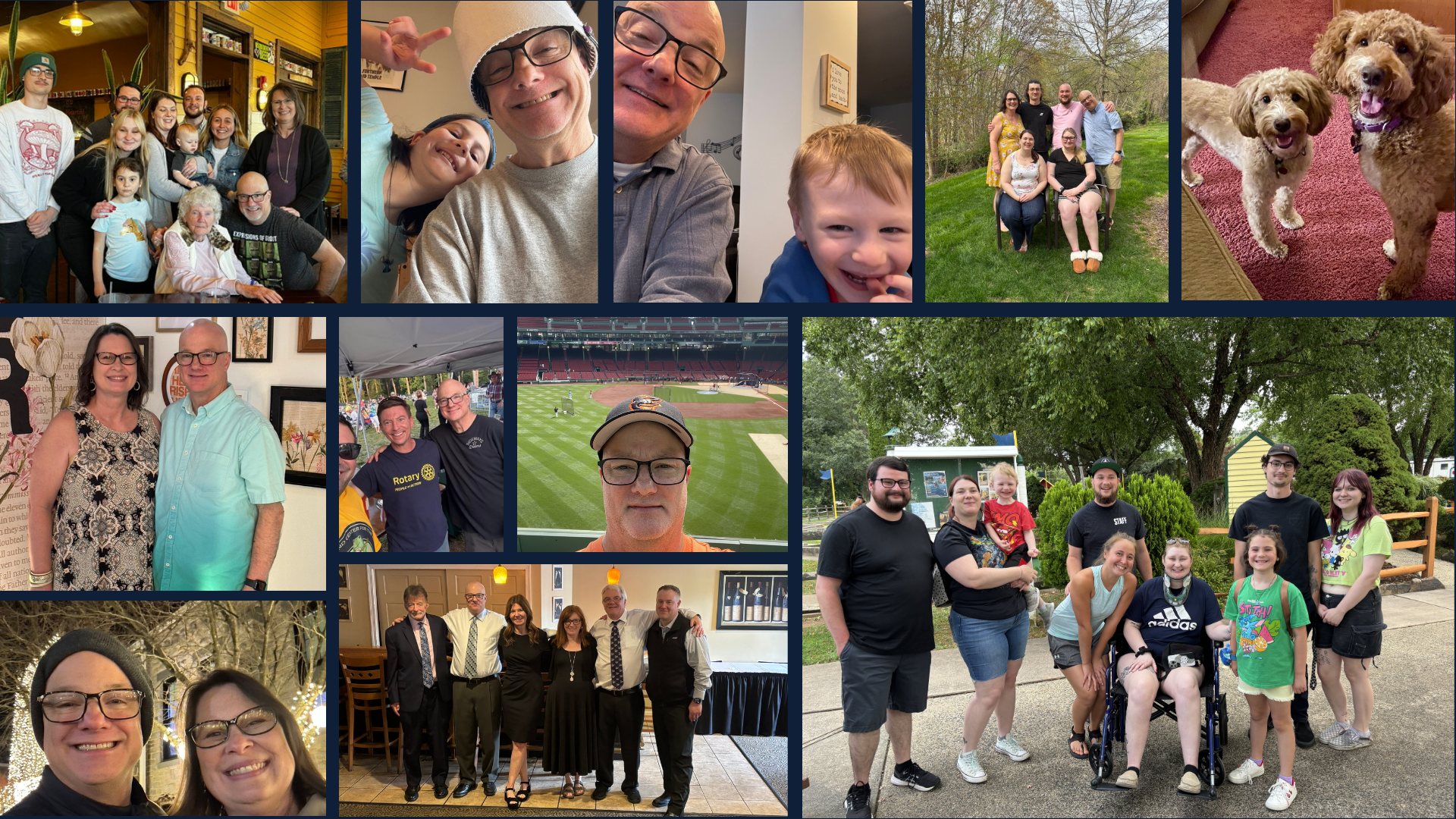
Family, faith, community, and the occasional Orioles game

Contact

Let’s Talk

Available for fractional CIO/CTO engagements, advisory work, and full-time technology executive roles. Deeply technical. Business grounded. Ready to engage.